
How Clean is your Clean Energy?
Published:
In the summer of 2022, the Inflation Reduction Act was passed by Congress. Its goal was to promote a transition to clean energy with subsidies for electric cars and solar and wind energy. It also was supposed to raise revenue through a small tax on share buybacks and increased tax enforcement by the Internal Revenue Service. How far has the bill been successful in achieving clean energy goals?
The White House IRA Fact Sheet claims that “Inflation Reduction Act’s clean energy and climate provisions have created more than 170,000 clean energy jobs”. The Climate Power Report makes a similar claim. If read closely, the first paragraph reads, “In just under a year, companies have announced or moved forward with projects accounting for more than 170,600 new clean energy jobs”.
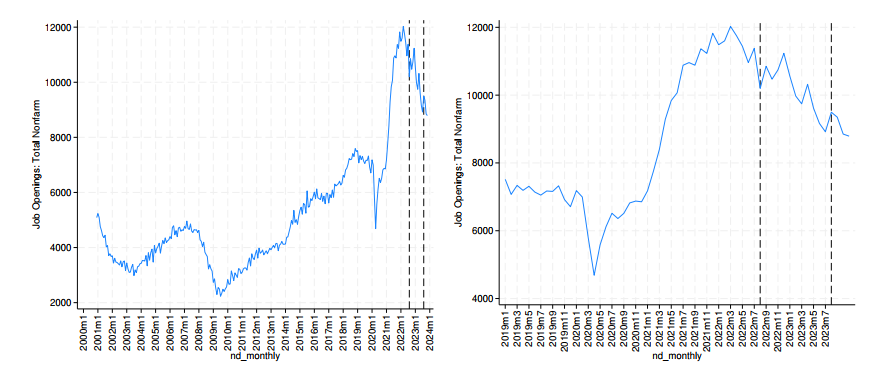 Figure 1: Nonfarm payroll (in thousands) Note: Source: U.S. Bureau of Labor Statistics, Release: Employment Situation
The area between the two vertical lines shows the period between the passage of the IRA and one year after that. In a recessional period, businesses and companies often lay off employees or limit hiring due to a decrease in demand for goods and services which results in a negative spike in employment. After a recession, as the economy begins to recover, firms start to increase production and services due to rising demand. This requires more workforce, so firms start to hire more employees leading to a significant increase in employment rates. These jobs are commonly known as the “bounce back jobs”. This upsurge often goes above normal as companies not only have to make up for their workforce shortage caused by layoffs during the recession, but they also have to account for increased demand. However, this surge tends to stabilize eventually. That’s because once companies have sufficiently increased their workforce to meet the demand at hand, the need for additional hiring decreases. Hence, the employment rate returns to normal levels. This surge was seen during the 2008 financial crisis and also post COVID-19. So, it is clear if there is a surge in non-farm payroll jobs, it is because it is a post-recession recovery period, not necessarily because IRA added clean energy jobs.
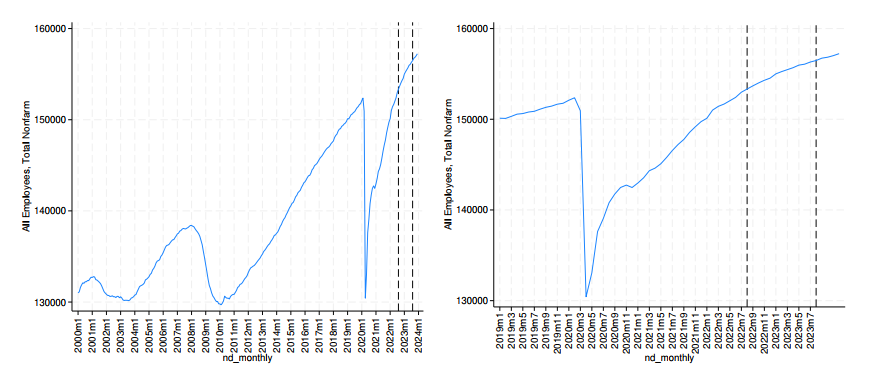 Figure 2: Job openings (in thousands) Note: Source: U.S. Bureau of Labor Statistics, Release: Job Openings and Labor Turnover Survey
Figure 2 shows the number of job openings. There has been an aggregate decrease in the number of job openings in the one year after passing of the IRA which raises further questions since when the overall job opening has declined, it is unlikely that just the clean energy jobs were newly added or there was a growth in the clean energy jobs.
Furthermore, according to the U.S. Department of Energy’s (DOE) U.S. Energy and Employment Report (USEER), clean energy added 114,000 jobs nationally in 2019, increasing to over 40% of total energy jobs. Thus, there was already a growth trend in clean energy jobs even prior to the passage of the IRA. This pre-existing growth trend indicates that the recovery and addition of energy jobs are more likely a continuation of the sector’s bounce back from the pandemic losses rather than a direct consequence of the IRA. Therefore, the assertion that the IRA is the primary driver of new job creation in the clean energy sector is not strongly supported by the available data.
Cautious Optimism on Electric Vehicles
Electric vehicles represent an exciting step toward reducing transportation emissions and achieving a cleaner energy future. At the same time, a full evaluation requires careful consideration of the entire system. The source of electricity generation matters greatly. If the grid still relies heavily on fossil fuels in many regions, the overall environmental benefit depends on both the vehicle and the power source working together. In addition, the full supply chain, including battery materials such as cobalt, deserves thoughtful attention to ensure sustainable and ethical production. With continued improvements in grid cleanliness and responsible sourcing, electric vehicles can play a meaningful role in the transition. The key is to approach this technology with realistic assessment of the complete picture rather than assuming immediate perfection.
Heat Pumps vs. Gas Boilers
There is another area where boost is given i.e. the heat pumps. To compare the greenhouse gas emissions of heat pumps and gas boilers, we calculate the CO₂ emissions per gigajoule (GJ) of heat delivered for each system, including transmission and distribution losses for electricity. For a gas boiler with 90% efficiency burning natural gas (emission factor: 56.1 kg CO₂/GJ), the heat delivered from 1 GJ of gas is 1 GJ × 0.9 = 0.9 GJ, with 56.1 kg CO₂ emitted, resulting in emissions of 56.1 / 0.9 ≈ 62.33 kg CO₂/GJ. For a heat pump with a coefficient of performance (COP) of 3, delivering 1 GJ of heat requires 1 / 3 ≈ 0.333 GJ of electricity, or 0.333 × 277.78 ≈ 92.59 kWh (since 1 GJ = 277.78 kWh). Accounting for 5.1% transmission losses, the electricity generated is 92.59 / (1 - 0.051) ≈ 97.57 kWh. Using the U.S. average marginal emission rate of 1,405.3 lbs CO₂/MWh (0.637 kg CO₂/kWh), the CO₂ emissions are 97.57 × 0.637 ≈ 62.16 kg CO₂/GJ. Under current U.S. grid conditions, both systems emit nearly identical CO₂, showing no clear emissions advantage for either under today’s mix. This parity highlights the importance of evaluating heat pumps and gas boilers in context, particularly given the grid’s reliance on fossil fuels in many areas.
Wind Energy Concerns
While wind energy has been presented as a green, renewable alternative to fossil fuels, it is not without a set of associated drawbacks. Firstly, one major concern with wind energy is its inconsistent and unreliable nature. Wind farms are only able to generate power when the wind is blowing at an adequate speed, which makes them less reliable than more traditional sources of energy. It necessitates the need for alternative backup systems for when wind power generation is not possible. Secondly, the infrastructure required for wind power, including wind turbines, can cause significant noise and visual disturbances. These turbines are a source of concern for many communities because of their impact on the local scenery and the potential for noise pollution. Thirdly, they require substantial land space for installation. This often leads to the destruction of natural habitats during the construction of the wind farms which negatively impacts biodiversity. Moreover, wind turbines can pose an existential threat to flying wildlife, particularly birds and bats. Many of these creatures are killed every year by colliding with the spinning turbine blades.
More recently, offshore wind has raised distinct oceanographic concerns. A 2025 Science Advances study by Seo and coauthors at Woods Hole Oceanographic Institution, using coupled ocean-atmosphere-wave simulations along the US East Coast, finds that cumulative reductions in wind stress from large turbine clusters warm the sea surface by roughly 0.3 to 0.4 degrees Celsius in stratified summer conditions, shallow the mixed layer, and suppress upwelling. The downstream effects include altered heat fluxes, a destabilized lower atmosphere, and potential disruption of shelf ecosystems such as the Mid-Atlantic Cold Pool that sustains regional fisheries (Seo et al. 2025). Lastly, from an economic perspective, the high initial costs for installation and maintenance pose a significant challenge. The capital costs of wind turbines are quite high, and the long-term maintenance costs can make them unattractive investments without robust long-term government subsidies. While mitigation strategies exist for each of these drawbacks, integration of wind energy into the power grid should be done thoughtfully to minimize these negative impacts.
The Subsidy Dilemma
There exists a significant amount of monetary resources, derived from taxpayer contributions, funneled into propelling clean energy technologies. A rigorous cost-benefit analysis is needed, in line with standard practice in public economics for evaluating large fiscal programs. The premise of clean energy and technology is often not fully substantiated by the available evidence, and the job creation projections remain unmet in many cases. There are also open questions about the consistency of some implementations with existing environmental review processes. The scale of subsidies and tax credits, including those provided by the IRA, raises legitimate questions when weighed against the original objectives that the legislation set out to achieve. The evidence to date suggests a meaningful gap between the projected outcomes and the realized ones in several areas.
This brings us to the second major purported objective i.e. tax on share buyback and increased enforcement. Firstly, the large volume of subsidies and tax credits on clean energy works against the two purported objectives mentioned above, while the underlying clean energy goals also remain partially unachieved. According to the Tax Foundation’s analysis, these provisions of the IRA have created significant implementation challenges and taxpayer confusion and have contributed to wider deficits. Thus, the bill appears to have suffered from imprecisely defined goals, despite the good intentions behind it. More data based evidence is needed just to define the correct goals. That is the first step before comprehensive solutions are suggested.